
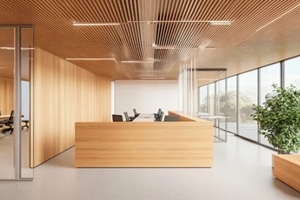
 “Integrity” is more than a buzzword in modern millwork design. Commercial spaces compete for every inch of customer satisfaction in highly competitive markets. Successfully attracting and retaining customers often requires a high level of personalization and attention to detail, even in the basic design concept.
When planning spaces to maximize their value, custom commercial millwork is a valuable tool for adding precision and craftsmanship and aligning the execution with the vision. This article reviews how custom millwork transforms commercial concepts into purpose-built environments that look, feel, and function exactly as the designer imagined.
What Are the Main Challenges With Maintaining Design Integrity?
When owners and designers collaborate on a vision for a commercial space, their goal is to match its features with the intended customer experience. They ask specific questions about its functionality, such as: what should customers feel when they inhabit the space? What behaviors should they be drawn to?
Answering these questions poses challenges at each step of the process, from the first renderings through to the final installation. However, when equipped with custom commercial millwork, designers can often address these challenges without significant compromise, maintaining design integrity through the right balance of planning and craftsmanship.
Challenge #1: Value Engineering Compromises
When owners and designers hear “value engineering,” they often think of reducing the complexity or quality of the vision to stay within budget. However, experienced designers and craftsmen view value engineering not as a limitation but as an opportunity to adapt. The goal is to prioritize decisions that align with the client’s budget without compromising the long-term value of their investment.
The best way to prevent late-stage compromises to a project’s vision is to invest in early-stage strategic design plans that optimize the budget without sacrificing the desired result. Custom millwork artisans can provide alternative construction methods to increase project efficiency, select the right materials for the intended customer experience, and achieve the right aesthetic within the established budget.
Essential Takeaway: Collaborating with artisans early in a design project helps designers and project teams maintain a consistent vision from concept through completion.
Challenge #2: Inconsistent Fabrication
A designer’s drawings can perfectly capture the mood that an owner intends to communicate, yet fail to offer practical guidance to fabricators on how the components will be assembled. This means builders may be forced to use generic millwork to approximate the designs, resulting in changes that create a disconnect between the renderings and the finished space.
By contrast, custom commercial millwork is not restricted to industry-standard dimensions. Designers can control the materials, proportions, finishes, veneers, and joinery to create a purpose-built piece. This process can include adding distinct shapes to encourage flow throughout a consumer space, branded elements such as built-in logos and imagery in permanent fixtures (e.g., a reception desk), and other transition elements that preserve the intended functionality throughout the design.
Pro Tip: Achieving consistent fabrication is easier with proper preparation. Custom details should be standardized across elements repeated in the business’s design, including edge details and material profiles. This will simplify the eventual fabrication process and allow designers to communicate more clearly with project teams.
Custom millwork artisans can remind design teams to communicate their designs not only in terms of appearance but also in the context of function and alignment, which will make fabrication and installation more consistent.
Challenge #3: Unifying Design Choices Around a Common Goal
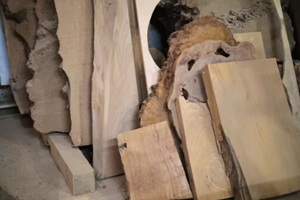 Design integrity relies on the cohesion of millwork elements across zones within the commercial space. This cohesion requires maintaining consistency across large items and small, repeated elements, which can be difficult when multiple vendors contribute to a single design.
Experienced millwork artisans strive to partner with their clients as a one-stop shop for their exclusive pieces, providing quality oversight throughout the project. Commercial millwork that feels intentional and functional will be more effective at reinforcing the brand’s identity and delivering the customer experience that the owner intends.
Example: Banquette and bench-style seating can deliver intuitive customer experiences in many industries, not just dining. In a retail or office environment, bench seating can turn unused lobby space into a customer-centric comfort zone. Hidden storage space allows workers to access amenities without disrupting service by searching through back rooms.
When multiple firms work on a business’s millwork, these touches often go unnoticed. Partnering with a single team of millwork artisans enables designers to leverage every detail to realize their vision.
Connect With Our Commercial Millwork Design Partners
At Sixth Avenue Custom, our millwork artisans leverage years of experience in commercial millwork to create pieces that make projects more coherent with the designer’s ideas and easier to execute for the project teams. Our goal is to provide a collaborative workflow from concept to completion, prioritizing communication in the early design phases and maintaining integrity throughout the project.
Contact our team to learn how custom commercial millwork can improve your business in Virginia, Maryland, DC, and the surrounding areas. At Sixth Avenue, you supply your vision for the look, feel, and function of your commercial spaces. Our artisans will take it from there.
Start Your Custom Journey
Ready to transform your home or business with custom furniture? Contact us now, and let’s bring your vision to life.
Your email address will not be published. Required fields are marked *