

Oct 26, 2026 · 6 min read· Summarize in ChatGPT

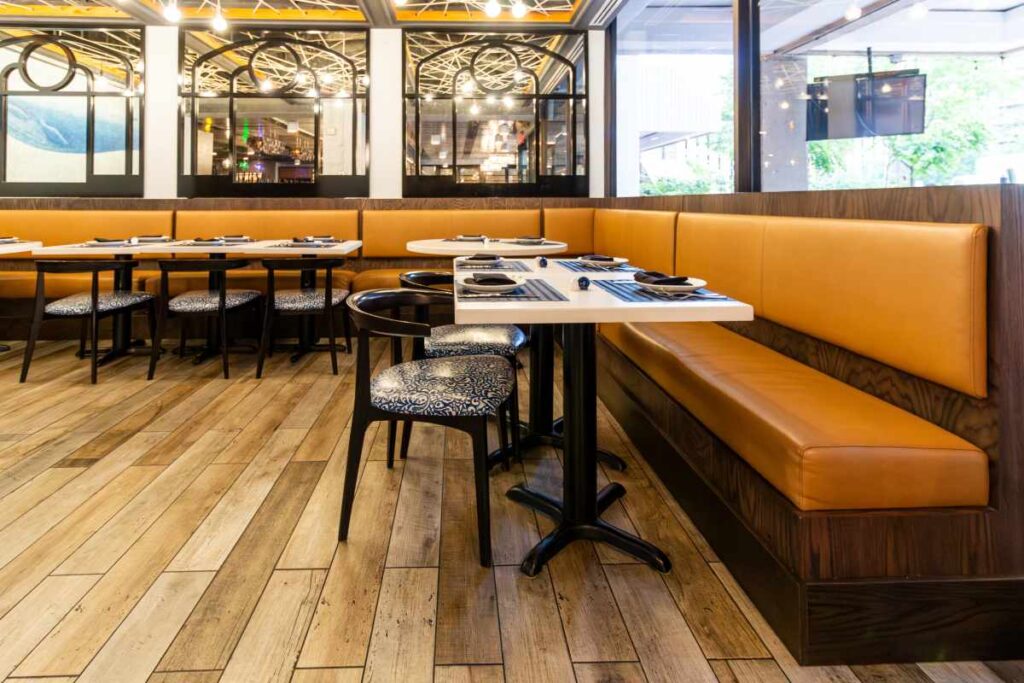
A banquette can be difficult to categorize in a build. Architects may list it on the furniture, fixtures, and equipment (FF&E) schedule as seating, while general contractors (GCs) place it in their scope as wall-fastening millwork. As a result, it can be lost in the middle and overlooked entirely when creating a budget.
This gap between FF&E and commercial millwork can happen on any restaurant build. Assigning items such as banquettes and host stands correctly before bid day is essential.
Where FF&E Ends and Commercial Millwork Begins
The line between FF&E and millwork comes down to whether an item can be carried out on its own. For example, a dining chair can be delivered, set in place, and hauled back out without touching the building itself; that qualifies as FF&E. A banquette built to the exact dimensions of one specific room and fastened to the wall is millwork.
Contracts usually sort this work through the Construction Specifications Institute (CSI) MasterFormat system, which numbers every category of a project. Millwork lands in Division 06, wood, plastics, and composites. FF&E lands in Division 12. A forum thread hosted by BuildingGreen, fielding Leadership in Energy and Environmental Design (LEED) documentation questions, points out that Division 12 was never built to draw a hard line against the base building and already contains items that read as permanent fixtures, built-in casework, countertops, and fixed seating among them.
The spec numbers describe where a scope is on paper, not who is responsible for it. Our commercial millwork services sit on the Division 06 side of that split for restaurant clients across Atlanta.
What OFCI and CFCI Actually Mean on a Restaurant Job
Owner-furnished, contractor-installed (OFCI) puts the purchase order in the owner’s hands while the contractor’s crew still handles the install. Contractor-furnished, contractor-installed (CFCI) keeps the whole transaction inside the construction contract. A banquette assigned as CFCI belongs to the GC’s scope and budget. If the banquette is assigned an OFCI designation, it means the owner cuts the purchase order directly with a fabricator, and the GC’s crew only installs it.
An OFCI status is the owner’s responsibility, though they may not realize that before their first build. An OFCI item that ships late was never the GC’s order, so the GC may not be on the hook for the delay. These designations and deliveries should be named on the drawings, not just the item, to mitigate disputes later on the job.
The Restaurant Items That Actually Cause Disputes
Four categories account for a large portion of scope disputes on a restaurant build. A banquette bolts to the wall similar to millwork, but it can read as seating, which pulls it toward the FF&E schedule out of habit rather than logic. Cabinetry, ice bins, and speed rails on a back bar might count as millwork, while the beer taps and point-of-sale equipment above the counter may be bought separately as FF&E.
Early design conversations may classify a host stand as freestanding furniture. Adding a phone line and card reader may force the design team to redraw the stand as built-in casework. A waiter station can raise the same question, since a built-in version may need blocking and power.
Assigning Scope Before the Drawings Go Out

Every item on the FF&E schedule should have a cross-reference to its spec section, and every item that could read as either casework or furniture needs an explicit call, not a default. A blanket casework allowance might let a banquette slip through, so millwork scope of work may be less ambiguous if done item by item. During the construction document phase, the design team should review Division 06 drawings against the FF&E schedule. This cross-reference can highlight overlaps before anyone installs physical work.
What General Contractors Should Flag During Bid Leveling
Project managers reviewing incoming bids should list the gray-zone items before comparing numbers, not after. If three subcontractors bid the same restaurant and only two included the back bar cabinetry in their millwork package, that is a scope gap. Responsibility-matrix logic works when applied to exactly these items (e.g., banquettes, back bars, host stands, and waiter stations) checked against every trade’s proposal before signing.
Who Pays When an Item Falls Through the Cracks
When a gray-zone item turns up missing close to opening day, multiple parties may share the costs of rush fabrication, expedited freight, or delays. This issue impacts the entire building industry. A study of 359 construction projects by the Journal of Construction Engineering and Management found that direct field rework averages about 5% of total costs. Overlapping banquette scopes provide a clear example of how these costs add up. Late construction adjustments can outpace the original budget contingencies.
Building a Repeatable Scope Checklist for Multi-Unit Restaurant Builds
Restaurant groups building the same prototype eight times a year cannot relitigate the FF&E and millwork boundary at every new location. A restaurant buildout checklist naming the banquette, back bar, host stand, and waiter station by delivery method, whether CFCI, OFCI, or straight FF&E, turns a recurring argument into a standard the team references going forward. That decision, locked into the prototype documents, protects location six the same way it protects location one. Our past restaurant projects include multi-location builds where the checklist got written after the first location instead of before it.
Common Questions About FF&E and Millwork Scope
Are Banquettes FF&E or Millwork?
Neither answer is definitive on its own. A banquette’s frame and mounting are typically millwork, since they attach permanently to the wall or floor. The cushions and upholstery are sometimes billed as FF&E instead, particularly where the owner wants direct control over fabric. The contract should name a delivery method for each component.
Who Installs FF&E on a Restaurant Build?
The delivery method named in the contract decides who installs what. A CFCI item gets installed by the general contractor’s own crew, since it was already part of that contract. An OFCI item still gets installed by that same crew, even though the owner bought it directly. Owner-furnished, owner-installed pieces skip the construction contract altogether, typical for smaller decor items.
What Does OFCI Mean in a Construction Contract?
OFCI stands for owner-furnished, contractor-installed. The owner purchases the item directly, often to control the vendor relationship or the budget, while the general contractor’s crew handles delivery and installation.
Whose Scope Is the Host Stand, the Back Bar, or the Waiter Station?
All three items depend on how they are assigned explicitly in the construction documents. Laying the spec sections next to the FF&E schedule during design development, item by item, catches these gaps before they ever reach a job site.
Confirm Your Restaurant’s Millwork Scope With Sixth Avenue Custom
Our artisans fabricate the Division 06 side of a restaurant build, including banquettes, back bars, host stands, and waiter stations, and we routinely get pulled into scope conversations because of it. Start your conversation with our team before the drawings go final.
